Showing posts with label beauty is truth - truth beauty. Show all posts

Wednesday, October 9, 2019

Like Mother Like Daughter

The other day, I was at home having lunch. As I finished my lunch, being in a super relaxed mood, I started talking gibberish. And then I grinned! A big, happy, proud grin!

The reason for that grin is that my daughter, Mahika, does exactly this the whole day. She just keeps talking gibberish the whole day, sing stupid songs, make up songs randomly and impromptu, and sing them in a sing-song voice, with her own music!!

It drives me crazy at times to listen to her songs! It mostly is the words that are just being spoken. So  you might be saying, "Mahika, please pick up your clothes!" Immediately, you'll hear from her: "Pick up your clothes, shadoo-do-do-do-do! Aaya-Munni tells to pick up the clothes shadoo-do-do-do-do!"

Or may be:

Pick up the clothes
Fothes, Toathes, Glothes, Mothes, Shothes!

Duh!!!

But then, I shouldn't really be complaining! You see, my mom says that I was just like that! Ohh...I mean, she is just like me! I used to do all these weird sounds, and be constantly talking all the time. Apparently, my daughter has inherited the wrong genes from me!

But then, to own it, I feel good, even proud! And I get a glimpse of what my parents must have gone through (ohh the boredom of hearing those stupid words and senseless songs!)

It is looking at my own five and a half year old self! 

Friday, July 1, 2016

Side Effects Of Being A Mother Of A Toddler

As your baby grows into a toddler, the Side Effects of Being a Mother slightly diminish and you develop the following side effects of being the mother of a toddler:


  • You can sing all nursery rhymes, even those that you never knew in your childhood.
  • You keep humming the nursery rhymes throughout the day.
  • You are unaware of any new film songs, or for that matter any new films.
  • Your diet has changed from 'bahar ka khana' to 'ghar ka healthy khana' to benefit your kid.
  • You keep on searching for newer recipes for snacks and breakfast.
  • You use the new vocabulary that your kid has developed. You'll probably use all those words when you are at office and with friends. You'll also use the same phrases and the same intonation.
  • As a mother, you would be the only person who really understands your kid's language.
  • Your friends and colleagues are most probably bored to death by listening to your kid's stories.
  • Your schedule still revolves around the toddler and becomes a little difficult when it is disrupted.
  • You have most probably gone through the kid-starts-school phase and gone through the heart-wrenching 'rona-dhona'. If you haven't yet, you'll soon go through that and you must steel yourself for that.
  • In gardens and public places, especially in society parks, every parent will ask you your kid's age. The immediate question thereafter is which school you've chosen for the kid. The third question is the fee structure, followed by the board of education, and where do you keep the kid when not in school.
  • You'll secretly compare your kid to the other kids of the same age and pride yourself on your kid's progress.
  • You'll hear at least 75% of mothers complain to each other about how the kids eat nothing or are extremely fussy eaters.
  • Ultimately, though you love every phase of your kid's childhood, you'll remember your kid's baby days and wonder how fast time has flown.

Tuesday, June 28, 2016

My Daughter Is Growing Up

Mahika, my daughter, is already two and has started Playgroup. It has been a wonderful journey seeing her grow up to a beautiful, adamant, smart, funny, little girl.

Sometimes, she seems almost grown up while at other times she seems a helpless baby clinging to her mommy.

But I am immensely proud of my little angel. At most times she is well-behaved and cares for everyone around her. She has her temper tantrums and drives me crazy when she throws them. But then, no fun without that. It would be so boring to have a tantrum-free child at home.

Mahika has been going to the daycare since last year. She also used to be in the Playgroup class then. That has given her an added advantage of knowing all the rhymes and loves all the activities there.

But since her official class has started, I've suddenly realised how much she has learnt. She knows most of the nursery rhymes and songs. She knows a few opposites too, in English as well as in Marathi. She can count up till seven in Marathi and up till 10 in English. She knows almost all the colours, blue being her favourite. A few months back it was (b)ink. That's pink. She sometimes says 'b' for 'p'.

Although she can say all sounds, she purposely replaces some on her own. So she used to call herself Makka, which changed to Mika. And now it's Pika.

And she now wants to do everything on her own. It is fun to watch her try things out.

Her sense of humor is quite astonishing. She can laugh at all absurd things and even at herself on some word play that occurs inadvertently. Her humor, playfulness, and caring nature endears her to everyone.

The apple of everyone's eye, she's growing up real fast. It won't be really long when she will be totally independent and out there in the big world.

Thursday, August 29, 2013

रात्रीचे भजन

काल जन्माष्टमी. मुरली मनोहराचा आगमनाचा दिवस. खरं तर रात्र. रात्री झालेला जन्म आपल्या कृष्णाचा.
ह्या शुभ रात्री शेजारच्या मारुतीच्या देवळात रात्री साधारण दहाच्या सुमारास भजन सुरु झाले. रात्री श्रीकृष्णाचा जन्म होई पर्यंत चालू असावे.

असावे म्हणाले कारण मला भजन संपायच्या आधीच झोप लागली. खूप शांत झोप. कित्येक वर्षांत भजन ऐकता-ऐकता झोपण्याचे भाग्य लाभले नव्हते. ते काल रात्री जमले.

खरे तर भजन म्हणणाऱ्या लोकांचे आवाज काही खूप खास नव्हते. पण तरीही खूप तन्मयतेने भजन चालू होते. टाळ-मृदुंग, आणि हरी नामाचा जप ह्याने आसमंत दुमदुमून गेला होता. हवेतील कुंद गारवा भजनाचे आवाज दश-दिशांना घुमवत होता.

मला आठवण झाली काही वर्षांपूर्वीची. आमच्या घराजवळच्या मारुतीच्या मंदिरात दररोज रात्री भजन होत असे. तेव्हा रात्री झोपताना भजनाचे हलके स्वर आणि टाळ. खूप आल्हादायक वातावरण व्हायचे. तेच काल रात्री अनुभवायला मिळाले.

आज-काल भजन पण ओघानेच ऐकायला मिळते. गावा-पाड्यात अजून होत असतील रात्रीची. पण शहरात अभावानेच.

भजनाकरिता काही सुरेख आवाज असण्याची गरज नाही. मनात भाव असला की ते थेट अंतःकरणात भिडते. म्हणूनच भजन म्हणायला कोणी "Indian Idols" लागत नाहीत. भोळे-भाबडे, कष्टकरी लोक जमवले की झाले.

थोड्याच वर्षांमध्ये आपले म्हातारे-कोतारे लोके पण नाहीशी होतील, तेव्हा भजन म्हणजे काय हे सुद्धा
सांगणारे उरणार नाहीत. तोवर आपण भजनाच्या रंगी रंगून जाऊयात. 

Saturday, July 6, 2013

Just A Small Gesture Made All The Difference

It was a Saturday and the roads were quite busy. We were on bike and there was a small truck ahead of us.
We were trying to overtake the truck when the cleaner who sits on the left signalled us to wait before overtaking. Sanjeev patiently waited till he signalled back that we could now overtake the truck.

As we passed the truck, Sanjeev waved to him. He smiled a big smile. I waved back too. And the way he smiled was so beautiful.

All along the way, he had been guiding other vehicles, allowing them to overtake, or signalling them to wait their turn. He was an old man, with missing teeth, unshaven face, and yet with a beautiful smile.

We both waving to him was such a wonderful thing. He smiled a smile that brought tears in my eyes. He was so happy to be acknowledged for the small work that he was doing. Perhaps for him it was nothing extraordinary. But to get attention for your routine work, to be acknowledged and thanked for that, was great for him. His face expressed the sincerity and truthfulness that he had. His old, wrinkled face that was full of the wisdom of so many years exuded the childlike joy that he felt when we acknowledged him.

When he waved back, it was just like waving back to his own kids, and giving them that lovely smile that makes your heart jump with joy.

Just a small effort from us was needed to make that man feel happy and loved and acknowledged. Perhaps he will remember us some day, perhaps he won't. But I will always remember that old man's blissful face. I will remember how it seemed like he was blessing when he waved back to us.

The man was certainly old, but I do wish that in the remainder of his life, he stays happy.

Just one gesture makes so much of difference in the world. World is beautiful! Let's try and make it more beautiful!

Sunday, March 17, 2013

Shakespearean Words By Baba

It is not the thing in itself that is good or bad.
It is the maker of the thing and what thou thinkest of him
That makes it thus or thus.
Done by the one, it is remarkable,
Done by the other, it is reprehensible.
Done by the one, it is commendable,
Done by the other, it is condemnable.
And thereby hangs many a tale.

Story behind these lines

Baba: Can you recall from which Shakespearean play these lines are?
(He recited the lines.)
Me: Are they from The Winter's Tale?
Baba: (Smiling cheekily, pointing to himself) They are by this Shakespeare!

Amazing what Baba can come up with!

Sunday, February 3, 2013

Just One Incident

It takes just one incident to know what you want to do ahead, how you want to deal with things, what path you want to take ahead. It all boils down to that one single moment of truth when realisation dawns on you. One single moment in which things fall apart. One single moment when things start making sense. One single moment that helps you take a decision.

Nothing more, nothing less. One incident can shape your life.

Tuesday, November 27, 2012

दरवळणारे सुगंध

गरम-गरम, आलं घातलेला, वाफाळलेला चहा...एका झटक्यात सकाळ सुवासिक बनून जाते. अशा चहाचा गंध घेऊन ज्याला चहा प्यायचा मोह होत नसेल, तो माणूसच काय!

प्रत्येक सकाळ ही एक नवीन सुगंध घेऊन येते. कधी पावसाची चाहूल, कधी थंडीची ऊब, तर कधी उन्हाचा तडाखा. प्रत्येक दिवसाचा जसा रंग न्यारा, तसाच सुगंधही. दिवस कसा असेल हे प्रत्येक सकाळच्या सुवासावरून कळते.

चैत्र महिन्यात वसंताची चाहूल लागते. सकाळी उठून एक उल्हासित सुगंध दरवळत असतो. जणू सांगत असतो की झाडांना नवी पालवी फुटणार आहे. नवीन आशा, नवीन स्वप्ने, नवीन आकांक्षा. सारं काही नवीन. निरभ्र आभाळाखाली एक दीर्घ श्वास घेऊन सभोवतालचा आनंद आपल्यात सामावून घ्यावा आणि मगच दिवसाची सुरवात करावी.

जशी उन्हाची तीव्रता वाढते, तसाच सुगंधही बदलतो. एक तीक्ष्ण असा सुवास येणाऱ्या तप्त दिवसाची चाहूल देऊन जातो. उष्णता त्या एका सुगंधात लपली असते. हा सुवास जेव्हढा उष्ण, तेव्हढाच कोरडा. सूर्य आता तापला आहे आणि आता कोणाची खैर नाही असा प्रेमळ इशारा असतो.

पण याच दिवसात एक अजून अलौकिक सुगंध घराघरांत दरवळत असतो. एका टोकरी मध्ये बंद करून ठेवलेल्या त्या फळांचा सुवास घरा-दारात भरून राहिला असतो. उगाच नाही त्याला फळांचा राजा म्हणत. खरा तर आंब्याच्या सीझनला असा एक दंडकच केला पाहिजे की  सर्वांनी उठल्यावर प्रथम आम्रसुगंध घ्यावा, आम्र-फळास वंदन करावे, आणि मगच दिनचर्येस सुरवात करावी. तसे न केल्यास आजन्म आंब्यांना मुकावे ही शिक्षा.

जसा आंब्याचा सीझन संपत येतो तसा येणाऱ्या वर्ष ऋतूची चाहूल देऊन जातो. "आज भयंकर उकडतंय, नाही?" "पाऊस येणार वाटतं!" "पाऊस येउदे एकदाचा, खूप झाला उन्हाळा!" असल्या उद्गारानीच आपण पावसाळ्यास सज्ज होतो.

सकाळपासूनच हवेत आर्द्रता जाणवत असते. मेघगर्जनेसह वळवाचा पाऊस हजेरी नक्की लावणार असे वाटत राहते. सकाळच्या दमट सुगंधाने शुष्क झालेल्या मनाने उभारी घेतलेली असते. पण नेहेमीसारखाच पाऊस हुलकावणी देऊन जातो.


कधीतरी रात्री धुमाकूळ पाऊस पडून जातो. सकाळचा पहिला श्वास तुम्हाला रात्रीची कथा सांगून जातो. वातावरणात, वळवाच्या पाऊसाने केलेला पहिला स्पर्श अजूनही तरळत असतो सकाळच्या धुंध वासात.


वर्षा ऋतूच्या विलक्षण सौंदर्यात धरती न्हाऊन गेलेली असते. दररोज सकाळी अधिकाधिक बहरत जाणारी झाडं, फुलं, पानं, सगळंच  विलोभनीय असतं. याच दिवसात पारिजातकाचा वेड लावणारा सुगंध तुमची सकाळ मोहवतो. रातोरात खुलणारी रातराणी, जाई-जुई, सायली, आणि मोगरा, या फुलांनी तर सर्व आसमंत भरून जातो.


सकाळ-सकाळी फुलांनी लगडलेल्या पारिजातकाच्या झाडाखालून कधी गेला आहात? किंवा, झाडाखाली कोणी हिऱ्यांचा सडा टाकला आहे, असे भासवणाऱ्या फुलांना वेचायला कधी गेला आहात का? फुलांचा सुगंध तर अप्रतिम असतोच. पण झाडाखाली पडलेली फुले वेचतावेचता, जेव्हा झाडावरून पडणारी फुले कधी आपल्या पायाशी, तर कधी आपसूक परडीत येऊन पडतात, तेव्हा काय अप्रूप वाटते! आणि नुसतीच फुले नाहीत, तर त्याबरोबर पानांवरून गळणारे टपोरे थेंब, कधी हातावर, तर कधी पाठीवर पडतात, आणि अंगावरून एक सुर्रकन शिरशिरी जाते.


पारिजातकाची फुले हातात घेऊन बघा, आणि त्यांचा सुगंध मनात साठवा. ओंजळ रिकामी केलीत, तरी सुगंध तसाच टवटवीत आणि मोहून टाकणारा येईल तुमच्या हातांना.


पावसाच्या सुरवातीस अजून एका प्रकारच्या वासाची खासियत आहे. सगळ्यांनाच हा वास आवडेल असे काही नाही. पण आहे मात्र या सीझनचे खास वैशिष्ट्य! छत्री आणि रेनकोट यांचे वास. वर्षभराने काढलेले छत्री आणि रेनकोट यांना नेहेमीच एक वेगळा, खास पावसाळी वास येतो. या वासाने मला कायम बेडकाची आठवण होते.


या दिवसात आपल्याला अजून एका वासाची सवय होते, किंबहुना सवय करून घ्यावी लागते. ओल्या, दमट कपड्यांचे वास. आपण कितीही प्रयत्न केला, पूर्ण झाकणारा रेनकोट-टोपी हे सोपस्कार केले, तरीही कपडे ओले होतातच, आणि लवकर वाळत पण नाहीत. आज पाउस येणार नाही, या विश्वासाने आपण बाहेर पडलो की पाउस हमखास आपल्याला फसवणार. मग ओलं होवून घरी येण्याशिवाय गत्यंतर नसतो. शिवाय रस्त्याने जाणाऱ्या वाहनांना तुमचा कोरडेपणा रुचत नाही. ते पावसाची कमी पुरी करतात. एकुणात कपडे ओले राहून दमट वासाची सवय होते.


असे भिजून आल्यावर कांदाभजीचा वास खुणावतो, आणि "खाण्यासाठी जगावे" ते पटते. गरम-गरम भाजीचा वास का एकदा नाकात गेला की मग ना पावसाचे भान, ना ओल्या कपड्यांचे.


श्रावण येतो आणि खाण्याची रेलचेल सुरु होते. नुसतीच सुवासित फुले नव्हे, तर खरपूस, खमंग, जीभेचे चोचले पुरवणारे, एक-से-एक, पदार्थ आपल्या खाद्य संस्कृतीत आहेत.


दर श्रावणी शुक्रवारी एक वेगळा पदार्थ. जीवती देवीच्या व्रतामुळे दर शुक्रवारी वेगवेगळे पदार्थ बनवले जातात. एका शुक्रवारी पुरणपोळीचा घमघमाट असतो. खीर, घावन, आरत्या, चवाचे कानवले या सगळ्यांचा एका पाठोपाठ क्रमांक लागतो. दर शुक्रवारी कामावरून घरी शिरल्या-शिरल्या असा काही मस्त वास येतो की ते वाण-बीण बाजूला राहिलं, लागलीच पानावर बसावे.


हे झालं शुक्रवारचे. पण श्रावणात तर प्रत्येक दिवसच साजरा करण्यासारखा असतो. घराबाहेर पावसाने चिंब झालेल्या मातीचा सुवास, तर घरात वेगवेगळ्या रुचकर पदार्थांचा. नागपंचमीला फळे, शिळसप्तमीला सांजा, पौर्णिमेला नारळी भात असले स्वादिष्ठ  पदार्थ. 


नागपंचमी ला मेंदीचा धुंध सुगंध. ओल्या मेंदीचा, हातावर सुकलेल्या मेंदीचा, आणि रंगलेल्या मेंदीचा सुगंध वेगवेगळा येतो. जितकी मेंदी रंगते तितकी मज्जा वाटते. पण जशी फिकी पडते तसं वाईट वाटतं. नक्षीदार मेंदीने सजलेले हात जेव्हा पूर्ववत बेरंग होतात, तेव्हा वाईट वाटते. पण आश्चर्य म्हणजे त्या पांढऱ्या हातांनापण अजून एक अती सूक्ष्म सुवास येत असतो!

खमंग, सुरमट, साजुक तुपातला नारळी भात घेऊन नारळी पौर्णिमा येते. पाठोपाठ येते जन्माष्टमी. दूध-पोहे आणि दही-पोहे इतका सोप्पा आणि टेस्टी नैवेद्य घेऊन!


मग वाट पाहतो आपण गणपतीच्या दिवसांची. धूप-दीप, अगरबत्ती, फळे, केवड्याची पाने, कमळाची फुले, लाल जास्वंदीची फुले, दुर्वा, पेढे, खोबरं-साखर, साखरफुटाणे, खारीक-खोबरं, सर्व गोष्टींचे मिसळण होवून एक अनामिक मंगलमय वातावरण तयार होते, बेहद्द आल्हादायक!

गौऱ्या घरी आल्या की आनंदाला उधाण येते. चिवडा-लाडू, करंज्या, अनारसे बनवले जातात आणि स्वागताची जय्यत तयारी होते. खीर-घावन, वरण-पुरण, वालाचे बिरडे, बटाट्याची भाजी, पुऱ्या, श्रीखंड, लोणचे, पापड, अगदी लिंबूच्या फोडीचा वास देखील पोटातल्या अग्नीला आहुती वाहतो.

विसर्जनाच्या दिवशी घाटावर जाऊन नुसते उभे राहिले तरी भरपूर फायदा होतो. घराघरातल्या विसर्जित होणाऱ्या गणरायांचे दर्शन होते. शेवटच्या कर्पुरारतीच्या सुवासाने आसमंत भरून गेलेले असते. आरत्या आणि "पुढल्या वर्षी लवकर या" या घोषात उत्साह शिगेला पोचतो. या सगळ्या उत्सवाचा आनंद तर घेता येतोच, पण त्या शिवाय अजून एक मोठा फायदा म्हणजे वाटल्या डाळीचा प्रसाद मिळतो. त्याकरिता तुम्ही घरातलेच असायला पाहिजेत असा काही नाही हां! येण्या-जाणाऱ्या सगळ्यांना मिळतो हा प्रसाद. कधी सुकी डाळ तर कधी ओली. पण त्याशिवाय गणरायाला निरोप कसा द्यायचा?

गणेश विसर्जना नंतरचे दोन आठवडे म्हणजे आपल्या पूर्वजांना प्रसाद देण्यासाठीचे दिवस. आपापल्या पितरांना श्रद्धांजली वाहिली जाते ती घरोघरी. हा काही सार्वजनिक सण नाही. तरीदेखील जेव्हा घरी "तीथ" असते, तेव्हा गोड वडे, तिखट वडे - खीर, आमसुलाची चटणी. गवार-भोपळ्याची, कारल्याची, भेंडीची भाजी, कढी हे सर्व पदार्थ केले जातात. मला तिखट वडा - खीर हे combination कमालीचे आवडते, अगदी कायम पण खाऊ शकते.

पितृपंधरवडा संपतो न संपतो तोच नवरात्र सुरु. नवरात्र म्हटला की मला आठवतं आमच्या घरी बाबा धूप लावतात दररोज संध्याकाळी तेच. आमच्या आईकडे देव बसवतात. सकाळ-संध्याकाळ पूजा आणि आरती. संध्याकाळच्या आरतीच्या वेळची घंटा आणि धुपाचा सुगंध मन एकदम प्रसन्न करून टाकतात.

घरी सवाष्णी घालतात त्या दिवशी चंदनाचा सुगंध येत असतो. चुलीवर मसाला दूध उकळत असते. एका बाजूस सर्व सवाष्णीना द्यायला घरचे विडे बनवले जात असतात. अश्या वेळेस मसाला दूध आधी घ्यावे की पान खावे हेच कळत नाही.

दसऱ्याच्या दिवशी पुरी-श्रीखंड हा बेत ठरलेला. श्रीखंडामध्ये भरपूर जायफळ घालायचे...नुसत्या वासानेच दुपारची वामकुक्षीची guarantee. दसऱ्याला आपट्याची पाने सोनं म्हणून सकाळी पुजायला ठेवतो तेव्हाचा त्यांचा वास आणि संध्याकाळच्या पानांचा वास वेगवेगळा असतो. संध्याकाळची पाने थकलेली, उदास वाटतात. पटकन कुस्करली जातात. कुस्करलेल्या पानांना पण वेगळा वास येतो.

दसरा संपतो आणि दिवाळीचे वेध लागतात. पावसाळा संपून हिवाळ्याकडे वाटचाल सुरु झालेली असते. पण म्हणून काही रविराजाला विसरता येत नाही. दिवसभर चांगलाच तापतो आणि तापवतो. पण संध्याकाळी गारवा पसरतो. दिवसा पानगळतीचा वास खूपच मस्त वाटतो.

आणि एक दिवस गल्ली-बोळातून जाताना बेसन भाजल्याचा घमघमाट येतो, आणि लक्षात येते की आली दिवाळी चार दिवसांवर. रस्त्या-रस्त्यांवर आकाशकंदील दिसायला लागतात. कुठे चकली, कुठे शेव, चिवडा, लाडू, शंकरपाळ्या, अनारसे, ह्या सगळ्या फराळामुळे दिवाळीची वाट आपण उत्सुकतेने बघायला लागतो. नवीन कपडे घेतले जातात. तुम्हाला आवडतो का नवीन कपड्यांचा वास? मला खूप आवडतो. दसरा - दिवाळी निमित्त घेतलेल्या नवीन कारच्या interior चा वास पण आवडतो.

आम्ही लहानपणी मौज म्हणून दिवाळीला "मोती चंदन" साबण आणायचो. दिवाळीच्या दिवशी पहाटे-पहाटे नवीन चंदन साबणाचा सुगंध, घराबाहेरून फटाक्यांचा वास, आणि सकाळचा थंडीचा वेगळाच सुगंध ह्याचे एक विलक्षण मिश्रण तयार व्हायचे.

भरपूर आनंद देऊन दिवाळी संपते आणि मग कडाक्याच्या थंडीचा मौसम सुरु होतो. भर थंडीत, अगदी दुपारीपण गोधडी घेऊन झोपावे, असे मस्त वातावरण होते. तेव्हा दुपारी उन्हात गेले की थंडीचा वास दरवळत असतो. याच दिवसांमध्ये दुपारच्या चारच्या वाफाळलेल्या चहाचे महत्व कळते.

जानेवारीमध्ये संक्रांत येते गुळपोळी घेऊनच. गरम-गरम गुळपोळी, त्यावर चमचाभर साजूक तूप, आणि चवीला बटाट्याची भाजी. ह्या combination ला तोडच नाही.

मग येतो वर्षातला शेवटचा सन, होळी! रंग, फुगे, पाणी, संध्याकाळची होळी, अन अर्थात पुरणपोळी. प्रत्येक सणाची काय वेगळी मजा असते ना! संध्याकाळच्या पेटलेल्या होळीने सर्वत्र गर्मी पसरते. येणाऱ्या वसंत ऋतूची चाहूल अलगद देऊन जाते.

वर्षभर वेगवेगळे सुगंध घेऊन आलेले ऋतुचक्र पुनश्च सुरु होते. गतवर्षीच्या विविध सुवासाची पुंजी घेऊन नवीन वर्षात आपणही जायला सज्ज होतो!

Thursday, September 8, 2011

I Know...

That's what I learnt from The Everywhereist.

And that's what I want to say to all those things that bother me at times, to those people that irritate me, but who still love me the way I am, seeing the good in me, helping me, loving me, being with me, supporting me, and most importantly, overlooking my flaws.

Those things and those people might have their flaws. I know. But I still love them! Thanks Almighty for each of them!

Cheers!

Saturday, June 18, 2011

Ajanta

Ajanta Caves
Ajanta, another World Heritage site, is something that cannot be missed. Situated at around 100 kms away from Aurangabad, you need the whole day to travel to Ajanta, visit the caves, and return to base camp.

The village near the caves is called Ajintha (अजिंठा) and in Marathi the caves are called अजिंठा लेणी. Ajanta caves are 30 rock-cut cave monuments dating from 2nd century BCE.

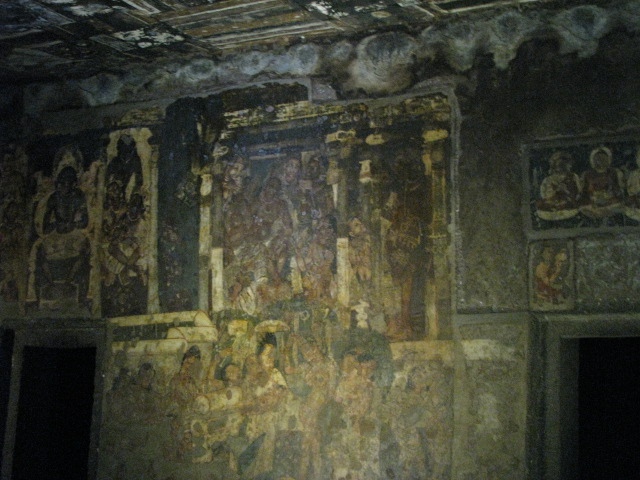
Ajanta caves include paintings depicting the Jataka tales. The paintings and a few sculptures are considered masterpieces of Buddhist religious art.

History

The Ajanta caves were carved out of a horseshoe-shaped cliff along the Waghora river. They were used by Buddhist monks as chaityagrihas (prayer halls) and viharas (monasteries) for about nine centuries, and then were abruptly abandoned. The walls of the caves are covered with beautiful paintings and sculptures of Buddhist origin. They fell into oblivion until they were rediscovered in 1819.

(Re)Discovery

Ajanta caves were discovered by John Smith, an army officer in the Madras Regiment of the British Army in 1819 during one of his hunting expeditions.

Number of Caves


There are 30 caves, with mostly been completed. A few caves are unfinished. A pathway is scooped out from stone and runs as a crescent by the caves. From this, one can have a glorious view of the ravine below.

What can you see in the caves?

The wall paintings illustrate the events in the life of Gautam Buddha. Stories and scenes from the Jataka Tales are brought to life on the walls.

Waghora River Valley
Why Ajanta?

Ajanta lies on the ancient trade route from the Arabian sea to the Deccan plateau. The Buddhist monks found the peace and seclusion they were looking for in the cool ravine of the Waghora river. With trade centers of Jalgaon and Aurangabad close by, the monks could go to these places to collect alms and return to the quiet of the caves.

Moreover, the texture of the granite rock in layers made it easy for the sculptors to cut the rocks with their instruments and for painters to paint.

How were the Paintings done in such Dark Caves?

Painters used stick torches to light up the caves. Mirrors were used to reflect sunlight into the dark caves. Skills were passed down from father to son. New techniques, tools, and new ways of handling paint and chisel were also invented.

Colours Used

Local colors available from mountain rocks and soil were used. The main colours used were yellow ochre, brown ochre, lamp black, white, and lapis lazuli (blue). Lapis lazuli was imported from Northern India, Central Asia, and Persia. Green was created from lapis lazuli using Indian yellow ochre.

Techniques of Painting

The paintings were executed after elaborate preparation of the rock surface. The rock surface was chiselled and grooves were made so that the layer applied over it could be held in an effective manner. The ground layer consisted of a rough layer of clay, cow dung, mixed with rock-grit or sand, vegetable fibers, paddy husk, grass, and other fibrous material of organic origin on the rough surface of walls and ceilings, thoroughly pressed into the rock.

A second coat of mud and ferruginous earth mixed with fine rock-powder or sand and fine fibrous vegetable material was applied over the ground surface. Finally, the surface was finished with a thin coat of lime wash. Over this surface, outlines are drawn boldly. The spaces were filled with requisite colours in different shades and tones to achieve the effect of rounded and plastic volumes.

The colours and shades utilised also varied from red and yellow ochre, terra verte, to lime, kaolin, gypsum, lamp black and lapis lazuli. The chief binding material used here was glue. The paintings at Ajanta are not frescoes, because they are painted with the aid of a binding agent. In frescoes, the paintings are executed while the lime wash is still wet which, thereby acts as an intrinsic binding agent.

Not-to-be-Missed-Caves

Caves 1, 2, 10, 16, 17, and 26 should not be missed.

We visited the caves starting from cave number 1. But I read it recently, which I found really sensible, that you should start with the last cave first. Thereby, you end at cave 1, which is also the exit point.

But let me caution you for this route. Make sure that you leave enough time in hand for the caves 1 and 2. Usually, as we start, we spend more time in the beginning. As time flies by, we tend to skip caves, or hurry across the numerous paintings and sculptures. That would mean that you have very little time for caves 1 and 2. Make sure you avoid that mistake.

I am still going to describe the caves as we visited them.

Cave 1

Padmapani
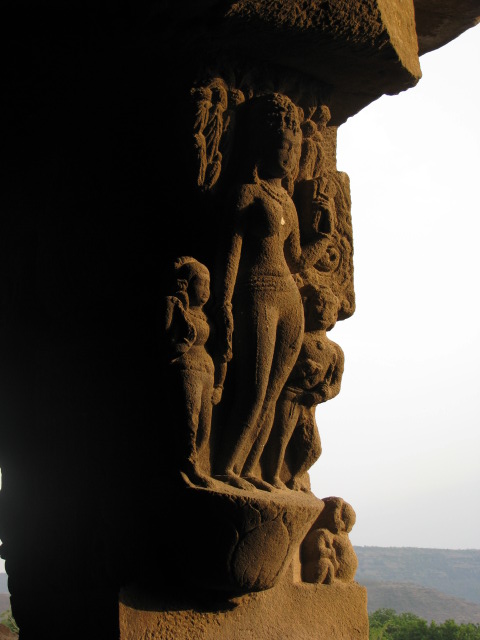
This is the most important cave of Ajanta and has elaborate carvings on its facade. There are scenes carved from Buddha's life and also decorative motifs. There are three doors, central, and two side-doors. Two square windows are carved between the doors.

The walls of the hall are nearly 40 feet (12 m) long and 20 feet (6.1 m) high. Twelve pillars make a square colonnade inside supporting the ceiling, and creating spacious aisles along the walls. A shrine is carved at the rear end of an impressive, seated image of the Buddha, his hands being in the dharmachakrapravartana mudra. A group of the master's first five disciples is also shown.

The walls are covered with scenes that are mostly didactic, devotional, and ornamental. The themes are from the Jataka stories (the stories of the Buddha's former existences as Bodhisattva), the life of the Gautama Buddha, and those of his veneration. One pillar in the central right row has a remarkable carving of four deer in different positions sharing the same head that seems to belong to each one of them.

Vajrapani
The doorway of the antechamber of the shrine is flanked by two Bodhisatvas: Vajrapani, holding the thunderbolt on the right, and Padmapani, holding the lotus on the left. Vajrapani is richly bejewelled and leans gracefully against an attendant. Padmapani's eyes are lowered in meditation, his face showing depths of spiritual calm born of compassion for all living forms.

The sidewalls of the antechamber show two scenes from Buddha's life: his temptation by Mara just before his enlightenment, and the miracle of Sravasti, where the Buddha multiplied himself into thousand images.

Above the left porch is the scene of Three Signs (a sick man, an old man, and a corpse) that Buddha saw outside the palace that led him to become a monk. Other tales of the life of Buddha from the Jataka Tales are depicted on the walls.

Cave 2

Paintings in Cave 2
Cave 2, very similar to cave 1 has robust pillars, supported by ornamental designs. The facade of this Mahayana monastery cave shows the kings of Naga and their entourage.

The hall is supported by four pillars making colonnades parallel to the walls. A glorious mandala dominates the ceiling and is decorated with humans, animals, birds, flowers, fruits, semi-divine forms, and abstract designs. The ceiling gives the effect of a cloth canopy, right down to the sag in the middle.

Jataka tales are abundant in the wall paintings. These tales inform us of of Buddha's teachings and life through successive births. The narrative episodes are not depicted in a linear order on the walls.

One of the paintings dramatizes the legend of the Buddha's birth in vivid details. It depicts how Queen Maya dreams about an elephant with six tusks. It also describes how Buddha is born and how he takes six steps as Lord Indra holds an umbrella over him.

Cave 10

Cave 10 is a chaityagriha-prayer hall of the monks. It is 28.5 X 12.3 m with a height of 11 m. It has a stupa at the end of the cave. The cave boasts of an imitation of wooden construction to the extent that the rafters and beams are also sculpted even though they are non-functional.

The paintings in this cave resemble the relief carvings at Sanchi in the 2nd century B.C. The painting on the left wall shows a King with his Retinue, worshiping the Buddha tree. The royal party stops at the stupa and then passes through a gateway. On the right wall are a series of large wall paintings. One painting shows the Shada-danta jataka-the Buddha in his elephant incarnation. The whole crowd is in movement.

One scene shows a six-tusked elephant that was the Buddha in one of his earlier birth. The animals are beautifully drawn and the large space of the forests is shown with its thick foliage and trees. In the second scene, the princess, seated on a stool, is shown fainting, because the six tusks of the elephant are brought to the king. The queen has wished that the elephant be killed. Now that his tusks are brought before the court, she faints at their sight.

On one of the pillars, a gracious figure in a pink and buff cloak surrounded by green aureole is emerging to cast blessings on mankind. Two monks kneel by his feet and the flying angels above his black head indicate that they are going to lift him to heaven. The umbrella on the top is symbolic of the protection he offers to all.

The painting of Buddha and the one-eyed-monk show the devotion of the followers of the Enlightened one. The face and figure of the Buddha and the monk seem to be echoes of the heavy physical types of Gandhara art of northwest India. Only the flowing draperies have softened their contours. The aureole on the Buddha's head and the closed eyes show a dreamy calm. The Shyama-Jataka on a wall in this cave relates the story of where the Bodhisatava was born as son of two blind parents, a hunter and his wife.

Cave 16

Cave 16 has a seated, more than life size Buddha shrine. Lions and other active animals support the throne. Bodhisattvas stand behind him.

Sundari fainting, with an attendant and nurse (in spot light) in Cave 16
It has a beautiful painting of the princess Sundari fainting after learning that her husband (the Buddha's half-brother, Nanda) was going to become a monk. The sad drama is depicted by the bent head of the the princess and the tense female attendants.

Another painting shows Buddha with the begging bowl.

In yet another painting, Prince Siddhartha is shown stretching the bow. Another master painting is the descent of Buddha from the Tushita heaven.

The Dying Princess is one of the famous paintings from Ajanta in this cave. There is agony in the drooping, sightless eyes, the helpless abandon of fingers, and the farewell gestures. The emotions of the attendants are also expressed beautifully.

Prince Gautam practising archery
The Sutasama Jataka painting narrates the story of the previous incarnation of the Bodhisattva and the son of the king of Indraprastha named Sutasama. The prince is trained in all the arts and sciences by a guru at Taxilla. One day, Sutasama was seized by a man-eating dacoit. The prince promised him he would come back and be eaten after he had offered flowers to the Enlightened one. And he did as he promised. The cannibal was surprised to see Sutasama. He, who had once been a fellow student of the Bodhisattva at Taxilla and then king of Benares was converted, and he became the king of Benares again.

Cave 17

The Wheel of Life
Cave 17 is covered with maidens, celestial musicians, celestial guardians, goddesses, and lotus petals. One mural shows Prince Simhala's encounter with the man-eating ogresses of Sri Lanka, where he'd been shipwrecked. Another shows the king of gods flying amidst clouds with his entourage of celestial nymphs (apsaras) and musicians.

On the portico's left wall, the Wheel of Life shows life in its different phases.
The love of happiness radiates through the pictures in Cave 17. The earth has become heaven. The Apsaras and the Flying Spirits float across the sky. Lovers sit in the air houses. All paintings seem to illustrate the beauty of nature and human love and happiness. There is a magnificent painting showing a king and queen with their attendants going in a royal procession. There are colorful umbrellas over their heads and trees in the background. Some women are looking at them through the window.

The Sleeping Buddha
Cave 26

Cave 26 is a chaityagriha. It houses the famous Sleeping Buddha statue. It's Buddha in the Parinirvana state in a horizontal position with all his followers mourning his death. The wall also depicts the scene of the Temptation of Buddha.

So Much to See and So Little Time

That's what you feel when you are in the caves, looking at the paintings, and taking in their beauty and art. I have been able to describe almost only a few of the important paintings and sculptures in the caves. But what each wall and each painting shows, is something that needs to be experienced by oneself.

Lifetime Experience

I shall recommend that we all should see these caves and paintings at least once in our lifetime. We take time out to visit places of natural beauty, fun and frolic, and even religious places. But we should really visit these caves to acknowledge and appreciate our glorious, rich heritage.

Thursday, June 9, 2011

Eagerly Awaited

The eagerly-awaited, ever-soothing, greenery-giving, splashy, beautiful, life-giving, romantic rains are here. Out with your raincoats, umbrellas and all your wet gear.

I can't wait for the weekend!

I love rains!

Friday, June 3, 2011

Ellora

Known as Velur (वेरूळ) in Marathi, Ellora caves are listed in the World Heritage Site list. Ellora is situated around 30 kms from the city of Aurangabad. There are 34 caves that are divided into Hindu, Buddhist, and Jain rock-cut temples and monasteries.

Understanding the Caves

Ellora Caves
Caves 1-12 are Buddhist caves, which include monasteries and chaityagrihas. Caves 13-29 are Hindu caves, with the famous cave 16, which is the largest single monolithic excavation in the world. Caves 30-34 are Jain caves, depicting Jain philosophy and tradition.

The caves are dated back to the time period of around 6th-7th century A.D. to 11th-12th century A.D. These caves are a classic example of the coexistence of multiple religions. These religious establishments could have had royal patronage, though not enough and complete information is available.

Inscriptional Evidence

Sculpture in cave 29
The only definite inscriptional evidence is that of Rashtrakuta Dantidurga (c. 753-57 A.D.) on the back wall of the front mandapa of Cave 15. The Great Kailasa (Cave 16) is attributed to Krishna I (c. 757-83 A.D.), the successor and uncle of Dantidurga. A copper plate grant from Baroda of the period of Karka II (c. 812-13 A.D.) speaks about the greatness of this edifice (cave 16). The inscription tells us that this great edifice was built on a hill by Krishnaraja at Elapura (Ellora). Apart from these two inscriptions, the cave complexes lack any other inscriptions.

The entrance to the caves from the car parking opens at cave 16. Also known as the Kailasa cave, it is a remarkable example of rock-cut temples. Its striking proportion, elaborate workmanship, architectural content, and sculptural ornamentation is marvelous. This cave is dedicated to Lord Shiva and named after His mountain home in the Himalayas, the snow-peak Kailasa.

Not-to-be-Missed Caves

Although it's right at the entrance, I am going to start from the beginning to describe the caves. We visited caves 6, 10, 12, 15, 16, 21, 25, and 29. We did not have enough time to visit the Jain caves. Caves 10, 12, 15, 16, 21, 25, 29, and 32 are not to be missed.

Chaityagriha-Cave 10
Cave 6

Cave 6 is a Buddhist cave with two fine sculptures. On the left is goddess Tara, and on the right is Mahamayuri, the Buddhist goddess of learning. A diligent student sits at his desk below.

Row of seated Buddhas in Cave 12
Cave 10

Cave 10 is a magnificent chaityagriha, a place of worship and meditation for the Buddhists. It has a beautiful, ornamental facade. Also known as Visvakarma, it is a typical chaityagriha with stone beams across the ceiling. A seated Buddha is enthroned in front of a large stone stupa in the cave.

Cave 12

Buddha giving his first sermon
Cave 12 is known as Teen Tal, literally meaning three floors. It is three storied, each with a hall with pillars. The walls of the shrine room are lined with five large bodhisattvas, and is flanked by seven Buddhas, representing each of his previous incarnations. It also has a sculpture of Buddha, giving his first sermon depicted by a pair of deer at his feet. The historical value of this cave lies in the fact that human hands built a three-storeyed building from rock with such painstaking efforts and skills that even the floors and ceiling are smooth and levelled. Teen Tala is a monastry-cum-chapel with cells.

Cave 15

Narasimha Avataar coming out of the pillar
Cave 15 is called the Cave of Ten Avatars or Dashavatar. It is a two-storeyed temple having large sculptural panels between the wall columns on the upper floor illustrating a wide range of themes, which include the ten avatars of Vishnu. A panel to the right of the antechamber also depicts the superiority of Shaivism in the region at the time - Shiva emerges from a lingam while his rivals Brahma and Vishnu stand in humility and supplication. One of the sculptures is Shiva as Nataraja.

Cave 15 is the only cave for which you  have to ascend a great many steps, because it is situated at a height. And that's the reason that it is not as frequently visited as other caves. So, if you want to visit cave 15, make sure that there are a few more people with you when you climb in. Going in there all alone is quite spooky. Unlike other caves, it smells of disuse. It's a strange feeling to be all alone with those sculptures all staring at you. And yet, the carvings in this cave are as beautiful as in others. Dedicated to Lord Vishnu, some of the sculptures are really magnificent.

Cave 16

Cave 16, Kailasa cave, is the best of the 34 caves. It is a temple worshiping Lord Shiva and depicts various poses, scenes, and stories of Shiva.

Dhwajastambha
Kailasa has been carved out of a single rock. Kailasa is believed to have been started by the Rashtrakuta king Krishna I. The construction was a feat of human genius – it entailed removal of 250,000 tons of rock, took 100 years to complete and covers an area double the size of Parthenon in Athens.

A two-storeyed gateway resembling a South Indian gopuram opens to reveal a U-shaped courtyard. The courtyard is edged by columned galleries three storeys high. The galleries contain enormous sculptures of various deities.

Gajalakshmi
The first huge sculpture is the Gajalakshmi that you see as soon as you enter the cave. Two life-size elephants cut in rock on each side in the courtyard magnificently guard the cave. The pillars, Dhwajastambhas in the courtyard are intricately carved.

The whole temple consists of a shrine with lingam at the rear of the hall with Dravidian sikhara, a flat-roofed mandapa supported by 16 pillars, and a separate porch for Nandi surrounded by an open court entered through a low gopura. The Nandi Mandap stands on 16 pillars and is 29.3 m high. The base of the Nandi Mandap has been carved to suggest that life-sized elephants are holding the structure aloft.

Mahabharat and Krishna Leela scenes
The temple is a tall pyramidal structure reminiscent of a South Indian temple. The shrine is complete with pillars, windows, inner and outer rooms, gathering halls, and an enormous lingam at its heart – carved from living stone. The temple is carved with niches, pilasters, windows as well as images of deities, mithunas (erotic male and female figures) and other figures. Most of the deities at the left of the entrance are Shaivaite (followers of Shiva) while on the right hand side the deities are Vaishnavaites (followers of Vishnu).

Narasimha Avataar
One of the most remarkable sculptures is the grand sculpture of Ravana attempting to lift Mount Kailasa, the abode of Lord Shiva, with his full might. Some other sculptures include Ravana offering his nine heads to Shiva, Shiva as Nataraj, scene of Shiva-Parvati wedding, Mahishasur Mardini, Mahabharat, Krishna Leela, and Ramayana carvings, Narsimha avataar, Vishnu resting, Tripurantak Shiva, and some other splendid carvings.

Ravana shaking Kailasa
You need at least two hours to see Kailasa. And it definitely is awe-inspiring.

Cave 21

Ramayana scenes
Cave 21 is also known as Ramesvara. It has figurines of goddesses Ganga and Yamuna at the entrance. Cave 21 is thought to be the oldest Hindu cave.

Cave 25

Cave 25 features Surya driving his chariot towards the dawn.

Cave 29

Nataraj in Cave 16
Cave 29 has sculptures of Ravana shaking Kailasa and the wedding scene of Shiva-Parvati. Pairs of lions guard its three staircases. Inside, the walls are covered in large friezes. To the left of the entrance, Shiva slays the Andhaka demon, then defeats the many-armed Ravana's attempt to shake him and Parvati off the top of Mount Kailash. There's also a dwarf baring his bottom to taunt the demon! On the south side, Shiva teases Parvati by holding her arm back as she prepares to throw dice in a game.

Cave 32

Shiva-Parvati wedding
Cave 32 from the Jain caves is known as Indra Sabha. The upper floor has elaborate carvings, including a fine lotus flower on the ceiling. Two tirthankaras guard the entrance to the central shrine. On the right is the naked Gomatesvara, who is meditating deeply in the forest - so much so that vines have grown up his legs and animals, snakes and scorpions crawl around his feet. On the upper level is also seen an imposing image of Ambika, the Yakshi (dedicated attendant deity) of Neminatha found seated on her lion under a mango tree, laden with fruits. We did not have enough time to visit this cave.

Overall, it is a great experience to behold the confluence and spiritual tolerance of three religions. The magnificent structures stand proof to the glorious culture, architecture, art, and painstaking efforts taken by the sculptors in those bygone days.

Grhishneshwar Temple

It is with a heart full of admiration, and the head full of the different sculptures that we come out of the Ellora caves site. It is easy to then visit Grhishneshwar and pay respects to Lord Shiva at one of the 12 Jyotirlingas in India.

Grhisheshwar is still a small temple, yet well-known, and very jagrut. The temple was constructed by Ahilyabai Holkar. It is believed that an ardent devotee named Kusuma offered prayers to Lord Shiva at Grhishneshwar by dipping the Shivalinga in a water tank. Eventually Lord Shiva appeared in front of her and her prayers for the restoration of her son's life were answered.

Back to Aurangabad

With a heart full of devotion to Lord Shiva, you return to Aurangabad for relaxation. Another big day awaits you: a visit to Ajanta.

Wednesday, February 23, 2011

Falling Leaves

Have you seen them? Lazily falling to the ground, swinging gaily in the wind, and falling with a hush.

I love the seasons that have these falling leaves: autumn and just before spring. In autumn, there is a beautiful tinge to the air, anticipating the winter months. It reminds me of cold, foggy mornings, with the feeble winter sun striving to peep through the still-remaining leaves, trying to warm you up. Somehow it also reminds me of me cycling early in the morning, sweating all over, and feeling the wonderful biting wind on my cheeks.

Before spring, the falling leaves bring with them a hope of the upcoming spring and summer. But it also brings the warning that it's going to be hotter by the day. When I see these leaves falling, I always wonder the change in the temperatures that we always experience. It's pretty amazing that one day in an year we have a temperature of 6 degrees Celsius, while another day in an year after a gap of six months, we have a temperature of 40 degrees Celsius. What a difference!

These falling leaves really leave me nostalgic. They remind me of होळी, गुळपोळ्या, शेकोटी, mangoes, hot coffee, and carom competitions at home when we were kids during summer holidays. And then they make me remind of the amazing power of nature!

What beauty is to be found even in these dying leaves! Can we ever surpass nature in terms of beauty? I think not!

Monday, November 1, 2010

Diwali Is Here

Do you know what I did today? I took my Scooty, took my camera, and just went for a ride in the city. Just went on all those roads that are now glittering with lights and lanterns, and akashkandils and roshnai. It was such good fun.

When I was driving from Narayan Peth, I could smell besan peeth being fried for besan laddu. It was so tempting. Yummy! Just the Diwali flavour and festivities round the corner. I am so glad I could take a round clicking away to glory all the beautiful lanterns.

Here are some pictures that I took...


Saturday, October 2, 2010

Nice Photo

I loved this photo: http://en.wikipedia.org/wiki/File:British_Columbia_Regiment_1940.jpg

It's so poignant. I loved the depth it showed...the long line of soldiers on the road...the mother and the son...the son leaving his mother's hand and running to hold his father's hand...all other soldiers looking serious and determined...the father alone looking back at his son...beautiful.

Look how the road is divided by the long line of soldiers. On one side, only two-three ladies, on the other all other ladies bidding farewell to the soldiers...looking at a grim future. The black-and-white photograph shows one whole generation of people men towards the unknown.

What a classic photograph!

Tuesday, September 21, 2010

Committed And In Heaven

So, it's finally happening! I am engaged and soon to be married...sounds so filmy. But true it is.

Preparations have started for the wedding and it is getting crazier by the minute. Right from the date, the time, office leaves, shopping...it's bizarre!

But in all this, I am the luckiest! Sanjeev Pradhan, my fiance is not only handsome and cool, but is also the most understanding, loving, and caring person that I have met. I am indeed lucky. I guess the mutual understanding and respect that I have seen in the two of us is indeed rare. Touch wood!

Life will move on. But I know that I will have the solid support of one person who right now dominates my thought, hopes, and dreams. Unbelievably, life has given me much more than I deserved, much more than I wanted, much more and wonderful than I had hoped. And I thank Him for that!

Here's to our new journey ahead, Sanjeev! Cheers!

Thursday, September 9, 2010

To Sweetie Pie!

To the naughty, bubbly, talkative, kind, smart, a-little-bit-manipulative-in-a-very-sweet-manner, darling of his parents' eyes, and extremely well-behaved Nanu! Happy Birthday!

Bless you!

Thursday, August 26, 2010

To A Sister!

Two years elder, two times better, and two times worthier. That's my sister-Mukta.

A voracious reader, a confident lady, a learned and intelligent person, yet open, brave, strong-minded with a ready-to-take-on-the-world attitude. That's her! There are only few girls that I know who have been brave enough to lead life as they want, and without support. She's from that elite group.

Her never-say-die and no-nonsense attitude are something that I always wonder at. In spite of the hectic schedule she has every day, I see her full of energy even at the end of the day when she is with her son, playing with him, entertaining him, making him have his dinner, and putting him to bed. It's amazing.

You should see her face when someone gives her gift, or when things happen as per her wishes. It's that one look that assures you that the world is a good place, indeed.

Her support and well-wishes are some things that I treasure a lot. I know she will always be there for me. And I'll be there for her, supporting her and relying on her.

It's her birthday today and I wish her immense joy, happiness, and serenity. I wish that she gets all she wants out of life. I wish her a healthy, glorious life. I wish that may all her dreams and wishes come true.

Here's a big hug from me! Happy Birthday!

Wednesday, August 4, 2010

Tribute To Babuji

29th July 2002 was when we lost this great man: Sudhir Phadke. His heavenly voice, his music, his compositions are incomparable. I am too small a midget to describe or comment on his music. Here's my tribute to Babuji: listing some of my favourite songs by Babuji.

अशी पाखरे येती
तुझे गीत गाण्यासाठी
स्वयंवर झाले सीतेचे
तोच चंद्रमा नभात
का रे दुरावा
मज सांग लक्ष्मणा जाऊ कुठे
राजहंस सांगतो प्रीतीच्या तुझ्या खुणा
आज कुणीतरी यावे
एकाच या जन्मी जणू
बोलले इतुके मज श्रीराम
चंद्र आहे साक्षीला
फिटे अंधाराचे जाळे
जीवलगा कधी रे येशील तू
पराधीन आहे जगती
स्वये श्री रामप्रभू ऐकती
लाडकी शकुंतला
एक वार पंखावरूनी
स्वर आले दुरुनी
सखी मंद झाल्या तारका
शेवटचा करी विचार फिरून एकदा

The list is endless!

Tuesday, August 3, 2010

Scampering Around

Day: Saturday
Time: 7.30 a.m.
Place: Parvati top

After steeling ourselves to climb Parvati, my sister and I finally made it to the top. This was after at least 7 years of total absence of Parvati-climbing practise. It was so tiring. We did not climb at one go. We stopped every few steps to catch our breath. But eventually me made it. It felt glorious. It felt awesome to feel our red faces, hot with the exercise. As we sat down to rest, we saw the regular Parvati-climbing members sitting and enjoying their morning chat. We saw enthusiasts climbing Parvati multiple times. We were in awe of those who had climbed several times and left to scorn at ourselves for being so tired even after a single climb.

In spite of the lack of exercise and practise, it was a fun. It was fun to be there at that moment, feeling the fresh morning air. It was great to be on our own, without my little nephew firing away his "How-What-Who-Which-When-Why" questions. It was good to be together just as two sisters and enjoy the time with each other.

Then we went to sit behind the main temple. It was wonderful there. A calm, cool breeze was blowing. A few drops of rain here and there, and it really felt like being in Alice in Wonderland. The regulars on Parvati were on their way to the Parvati mandir and we were just sitting there in the cool breeze.

A little girl with her father were on their way back. Their camaraderie was a wonderful thing to see. Both were happy with each other. And suddenly, in a light moment, the father scampered with his little daughter just as she did, as if they were coming out of their last day at school before summer vacations. It was such a cute sight. Not only did the little girl enjoy, but I suspect that the father enjoyed this childishness more than anything else.

It's so much fun to be kids once more.

Replaying the kid and her dad in our mind, we remembered that there was another kid-Anay, waiting for us at my sister's place. We scampered down Parvati and went home with a mental promise of returning the next weekend again.

The Moral Compass

Screech! I braked hard as a teenager cut me off from the opposite direction. I took a deep breath, trying to regulate my body after the adre...