Murphy's Law:
If anything can go wrong, it will.
Gumperson's Law:
The probability of anything happening is in inverse ratio to its desirability.
Simon's Law:
Everything put together falls apart sooner or later.
The Unspeakable Law:
As soon as you mention something...
...if it's good, it goes away.
...if it's bad, it happens.
Hane's Law:
There is no limit to how bad things can get.
Bedfellow's Rule:
The one who snores will fall asleep first.
Ballance's Law of Relativity:
How long a minute is, depends on which side of the bathroom door you're on.
Lemar's Parking Postulate:
If you have to park six blocks away, you will find two new parking spaces right in front of the building entrance.
Bell's Theorem:
When a body is immersed in water, the telephone rings.
Bess's Universal Principles:
1. The telephone will ring when you are outside the door, fumbling for your keys.
2. You will reach it just in time to hear the click of the caller hanging up.
Boob's Law:
You always find something the last place you look.
Law of the Search:
The first place to look for anything is the last place you would expect to find it.
Maryann's Law:
You can always find what you're not looking for.
Lewis's Law:
No matter how long or how hard you shop for an item, after you've bought it, it will be on sale somewhere cheaper.
Richard's Complementary Rules of Ownership:
1. If you keep anything long enough you can throw it away.
2. If you thro anything away, you will need it as soon as it is no longer accessible.
Etorre's Observation:
The other line moves faster.
Worker's Dilemma:
1.No matter how much you do, you'll never do enough.
2. What you don't do is always more important than what you do do.
Aigener's Axiom:
No matter how well you perform your job, a superior will seek to modify the results.
Shapiro's Law of Reward:
The one who does the least work will get the most credit.
Seay's Law:
Nothing ever comes out as planned.
Ringwald's Law of Household Geometry:
Any horizontal surface is soon piled up.
Horowitz's Law:
Whenever you turn on the radio, you hear the last few notes of your favourite song.
Zadra's Law of Biomechanics:
The severity of the itch is inversely proportional to the reach.
Sunday, December 6, 2009
Monday, November 30, 2009
Every Second
10.48 in the night and there's still no electricity. All darkness around. The night is alive again. The only difference is, that there is an ear-pressing silence everywhere. With no electricity, the refrigerator is silent. The TV is off. The tubelights, which would usually hum right till midnight are mute.
As I lay on my bed, I think of all things that are happening at the moment in the world around...
At this second, waves are lashing on shores.
...birds are flying.
...people are rushing to their work.
...dogs are barking.
...children are playing and having fun.
...winds are blowing.
...people are talking, fighting, discussing, relaxing, working, smoking, drinking, and what not.
...earth is rotating and revolving.
...water is gushing out in volumes from waterfalls.
...rivers are rushing out to the sea.
...writers are writing, readers are reading.
...people are eating and people are starving.
...trees are cut down and made into furniture.
...lions, tigers, leopards, cheetahs, bears, and other such animals could be hunting for prey.
...people are praying for a better life.
...flocks of sheep grazing out and munching on a content life.
...birds are flying in the open sky and fishes are swimming in the expansive waters.
...time is ticking.
Friday, November 27, 2009
Uplifting Experiences
Ting! The doors open and you hear a cool female voice: "Fourth Floor." People in the corridor rush in just like commuters rushing in to catch the just-arrived local on a platform. And just like a platform that's quickly deserted after the local has left, the corridor is empty.
Cramped inside, you'll barely have space to move. And even if you have, you might feel awkward doing so, ensuring that you don't attract a lot of attention in the closed space. If you see a colleague inside with whom you are not particularly inclined to talk at that moment, you will probably busy yourself in your mobile, watch, papers if you have any in hand, or just pretend that you aren't aware s/he's there with you. If unluckily s/he pings you, you will show your surprise and say a few words to that effect. In reality, you will curse for waiting for the lift and will step out at the next floor even if that wasn't where you wanted to go.
Most of the times, you won't get a ride going up or down when you need it most. That's where nature compensates for your loss of patience and want of exercise. You can almost hear Her say, "Man, you are taking life too easily. Let me put in some obstacles. In any rate, staircases are safer places to move. You'll get more space and can keep moving all the time." You will obviously wait for a long time until one of the cages finally come, typically full. Cursing again, you will run up or down the staircase. And I am 200% sure that the next lift that arrives at your floor is the one that's empty and goes in the direction that you want. But of course, till that time you are halfway up or down your way.
It will so happen that when you wait for a lift for some time, the crowd in the corridor will increase steadily and then when the lift finally arrives, there will be a hustle to catch that blessed cage. Waiters (people waiting for the uplift) will barge in for their emancipation, regardless of their rank, number, or seniority. Youngsters will show their spark of quickness at moving and be right at the end of the cage before you say "May I?" And that's one time again where male-chauvinism is foremost. Ohh, you possibly can't expect men to wait for women, especially pregnant women to catch the elevators. That's old-world gentlemanly behaviour. We are in the modern world now! No one has told them yet that elevation needs high standards.
Finally when you are lucky enough to step in the conveyor, you will get to hear all kinds of conversations. You will get to know the latest score of an ongoing cricket match, lunch plans for the afternoon, movie reviews, critical work issues and their possible solutions, traffic khabar, latest gossip, who's leaving (if you are lucky to have HR folks with your), and even kid-tales if you are (un)lucky enough to get a bunch of working mamas in the lift.
When you go in a lift, remember a few things. First, remember on what floor you are and the floor that you want to go to. Secondly, if you are sleepy, it is better to take the stairs. You will at least shake off your sleep. Because it might just happen that you enter the lift on the fifth floor and keep on pressing the button for the fifth floor when you actually want to reach basement two. If you are lucky, someone will point out: "Madam, yeh fifth floor hi hain!" If you aren't, you might just have to wait for someone else to get in, or till you get back your senses and understand that lifts won't work if you don't make them budge from their floors.
One more thing you ought to watch out for is the direction. It's a universal law that when you are desperately waiting for a lift, the ones going in the opposite direction will all make a stop. None will come that takes you in your direction. Steps are better. They take you up and down at the same time. Staircases also make a healthier option.
Your workplace can be a healthier and curse-free area, if you purposely avoid these iron cages to commute. But then you will also never have such elevating experiences. Ups and downs will always be there. You got to definitely know on which floor you want to get out!
Ting! Ground Floor!
Saturday, November 21, 2009
Chintoo Darshan
 उठल्या-उठल्या सकाळी
घोष्ट करावी पहिली
उघडावा "सकाळ" आणि वाचावे "चिंटू"
He majha breed vakya. Khatyal, niragas, kadhi-kadhi agau, vratya, lobhas, cute ashi sagli visheshana tyala lavta yetil. Diwasachi survaat majhi Chintoo vachunach hote.
Jevha Chintoo suru jhala tevha kahi tari vegla Marathi madhye asa jhala hota. Halu halu itka chaan misalun gela aplyat ki varshanuvarshanchi olakh ahe asach vatata ata. Mhana ata kiti tari varsha jhali tyala. Tarihi navinya tikun ahe tyat.

Mulancha vishwa, khel, mitra-maitrini, abhyas, navin vastu, bhandana, kadhi tari current affairs, udaharanartha nivadnuka, kinwa, cricket, ashya vividha vishayanvarcha Chintoo vachayla majja yete. Ekhadya diwasacha vachun lahanpani chi athavan yete. Kadhi kadhi, mala pan hech mhanaycha hota asa vatata. Kiti tari vela, amchya gharat asach ghadta asahi vatata. Asach ek Chintoo je amchya gharat baryach veles hota...

Kahi tar itke cute astat ki "Cho cute!" asech udgaar yetat. Hyatlach ek mala awadlela Chintoo ...

Ek ajramar Chintoo mhanje PuLa jevha gele tevha. Ekahi shabda na bolta chatka lavun gela.
Chintoo che Aai-Baba, Pappu, Mini, Baglya, Raju, Neha, Sonu, Sateesh Dada, Joshi Kaku, Aaji-Ajoba hya saglyancha gamti vachayla kharach majja yete. Hats off to Charuhaas Pandit and Prabhakar Wadekar. Hyanchi official website ahe...http://www.chintoo.com/.
Chintoo cha ani majha ajun eka babtit ekmat ahe...ki aamche vadhadiwas phaar usheera yetat. Doghanche hi November madhye yetat ani varsha chya akheris aslyane ajun kiti vel thambaycha asa hota. Aso!
Aaj Chintoo cha vadhadiwas ahe. So, Happy Birthday Chintoo!
Thursday, November 19, 2009
An Eventful Evening
Driving, photography, and fretting about the car...those were the events that made my evening yesterday.

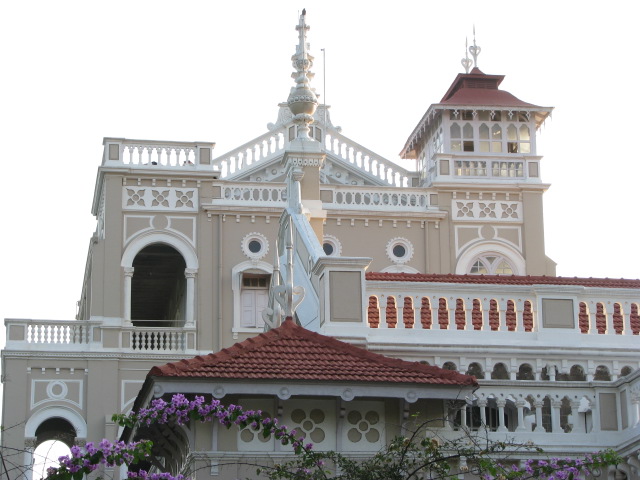
With free time at hand, I thought of visiting some places around the city. The first one I chose was Aga Khan Palace. It is a beautiful place. Built in 1892 and donated to the country in 1969, this palace is more known for the samadhis of Kasturba Gandhi and Mahadev Desai, Gandhiji's personal secretary. Kasturba Gandhi and Mahadev Desai both died here under house arrest.
Just four rooms are open for public in this huge palace. One was occupied by Sarojini Naidu, the other by Mahadev Desai, and the third by Gandhiji and Kasturba. The fourth room is a big hall with paintings, photographs, a sculpture, and some other informative writings, though not enough.
 One room holds some things that were used by Bapu that include of all the things forks and spoons. I was amazed. Why did Bapu ever have to use forks? I am shocked and kind of disillusioned too. It has made me think if he really did live in as simple a lifestyle as it was known.
 The worst part of the rooms is that the paintings, photographs, writings, and other things on display are kept in such a bad condition. Decayed and not cared for, it is shameful that we can't preserve our history proofs in a better way.
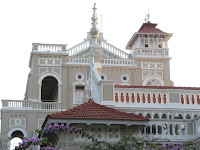
Inspite of all the neglect indoors, the grounds are beautiful and well-maintained. Beautiful green lawns, huge, green trees, fountains, and flowers are spread in the ground beautifully. The entrance fee for visiting the Palace are 5 Rupees and I suspect that all those are used to maintain the gardens and not the indoors. I had fun taking pictures in the grounds.
 When we returned to the car park, we realised that the battery had run down because I had inadvertently left the lights on. I tried starting it. But it didn't work. Then I tried calling some emergency numbers, but that didn't work out too. Finally the security guards at the Palace helped me start the car by pushing it and starting it. Thanks to them all. I had always seen how cars are restarted when the battery is run down. But that was in movies. I now have a first-hand experience of how it all happens. Of course, I did not jump-start it, because I didn't know how to do it. I shall be able to do it next time, I am sure. I just hope I never have to do it again.

Just four rooms are open for public in this huge palace. One was occupied by Sarojini Naidu, the other by Mahadev Desai, and the third by Gandhiji and Kasturba. The fourth room is a big hall with paintings, photographs, a sculpture, and some other informative writings, though not enough.
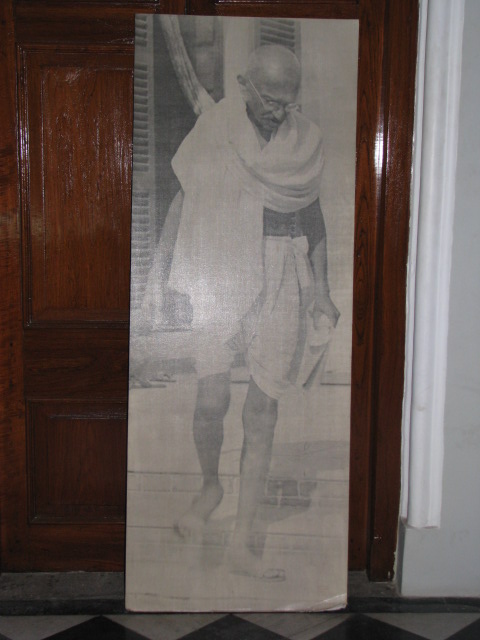 One room holds some things that were used by Bapu that include of all the things forks and spoons. I was amazed. Why did Bapu ever have to use forks? I am shocked and kind of disillusioned too. It has made me think if he really did live in as simple a lifestyle as it was known.
Anyway, the one room that was used by Ba and Bapu can be seen from outside. You cannot enter that room. It is this huge room with Bapu's charkha, and other things, a gaddi, some chairs, and other stuff. A huge bathroom is attached to this room containing a wash basin, a tub, and a western toilet. Really simple living!
 The worst part of the rooms is that the paintings, photographs, writings, and other things on display are kept in such a bad condition. Decayed and not cared for, it is shameful that we can't preserve our history proofs in a better way.
The samadhis of Ba and Mahadev Desai are nicely made and lie in tranquility.
 When we returned to the car park, we realised that the battery had run down because I had inadvertently left the lights on. I tried starting it. But it didn't work. Then I tried calling some emergency numbers, but that didn't work out too. Finally the security guards at the Palace helped me start the car by pushing it and starting it. Thanks to them all. I had always seen how cars are restarted when the battery is run down. But that was in movies. I now have a first-hand experience of how it all happens. Of course, I did not jump-start it, because I didn't know how to do it. I shall be able to do it next time, I am sure. I just hope I never have to do it again.
That was how the evening ended.
Tuesday, November 17, 2009
Godaan
Munshi Premchand...a very respected Hindi and Urdu writer. I came across the translation of his most famous work "Godaan" and I picked it up in sheer curiosity. I was never a great reader of Hindi literature. But I remember having one of his stories to study in school. I picked up the book just to know why it was so famous.
I may not be able to tell a lot about the book. But this book is definitely a good read. The translation, I suppose, could have been better. But I found it entertaining.
 Godaan is the story of Horiram, his wife Dhania, son Gobar(dhan), daughters Sona and Rupiya, and other characters in the story, which are quite a number of them. You will meet most of the usual crowd that you will find in a village drama, the local policeman, the sahukars, the pundits, the city-bred folks, the upper-caste and lower-caste people. The novel records Horiram's dream of owning a cow, which is not just the pride of the household, but also considered sacred, the problems he faces, and how society plays an important role in all this.
Horiram's utter poverty, deprived conditions, loans to run the family and household, and social norms that he faces and succumbs to is a major theme in the novel. Loan sharks take away his money, his farm produce, his bulls, his self-respect too. But there's one thing that they just can't take away...his dreams. Horiram is just a representative of the lakhs and crores of farmers who share the same plights. Their world is almost similar to what is shown in the book. And I doubt it has changed much since the book was written in 1936. The socio-economic deprivation of small, poor farmers is, I guess, still the same.
Premchand has very intricately shown a diaspora of themes intertwined with each other. You have the problems Horiram faces due to his loans, the extravagant celebrations at Rai Sahib's place, the city-bred folks and their discussions on politics, money, life, social standards, their hypocrisy, a disruption in social order as high-caste men ensnare low-caste women, life of the city dwellers, marriages, weddings, social festivals, and human emotions all spun in the same tale.
While at one place Horiram's life is dwindling towards ulitmate destruction due to loans, Premchand portrays the exhuberant and lavish life of the city folks who are great talkers of social reform and greater misers who exploit farmers, labourers, and at times, even helpless women. Life at its best and life at its worst...all shades and all walks of life.
I guess at its time, the novel would have been quite forward in its thoughts. It shows a lady doctor, Miss Malti, who has come back from England and who falls in love with a philosopher, Mr. Mehta. In the end they both accept their love for each other but decide not to get married but still stay together and love each other. I think this was an unknown thing at that time...staying together without marrying (although in a city) was not much heard of. Moreover, they might have been ostracised by the society. But Premchand was ahead of his times and had the courage to show this, especially because the lady suggests this option which the philosopher readily accepts.
Premchand also has shown widow-remarriage. Interestingly, Jhunia, who is a widow starts loving Gobar and becomes pregnant. Gobar too loves her truly, but is apprehensive about his mother's reaction. He abandons her at his parents doorstep and flees when he is sure that his mother has taken Jhunia under her wings. Till the end, Jhunia and Gobar are together as husband-wife, yet they are never shown as actually married. I found that amazing.
Matadin, the son of the local pundit ensnares a low-caste chamarin Siliya, impregnates her, and then disowns her when her family force him to eat meat. Siliya really loves Matadin and prefers to raise the child with a quiet determination of loving Matadin forever. She believes that Matadin will come back to her and ultimately he does.
In all this, Premchand shows the hypocrisy of religious men, of men in power, of wealth, of social norms, of principles, of ideals.
Premchand's characters are full of life and three dimensional. Most of the landlords and loan-sharks behave just as they should, just as they have been doing all these generations. And so do the villagers. They come to wish luck for good tidings and thwart the miserables when in dire conditions. That's what everyone does. It's human after all to be there with people when they are going through a good patch and desert them when life turns bad for them. Life's like that!
Dhania is a very strong woman. She is (in)famous for her acrid tongue. She does not take a single abuse, injustice lying down, especially against her own self, or her husband, who is rather a simpleton and god-fearing. She is ready to fight the ridiculous and unjust social laws, yet is held back every time by Horiram. In spite of that, she respects Horiram and supports him. I admire her character especially in two situations...one is when Jhuniya, five-months pregnant, lands at her door. Dhania was aware of Jhunia and Gobar's affair, and had vehemently talked of never letting Jhunia step into the house if Gobar married her. Yet, when she is at the doorstep, Dhania complains initially but ultimately does not turn her out. She welcomes her in house as her own bahu and loves her all the more. She never mistreats Jhunia and showers her love on Jhunia and her son.
The second incident is when Siliya is outcast by the village. Dhania gives shelter to Siliya and allows her to stay at her place fully knowing that the whole village was angry with Siliya. She did not care about the whole world but stood by Siliya although she was a low-caste woman. Dhania's strength, struggles, a modern outlook towards life, pride in her family and kids, heart-wrenching pitiable state, yet her will power make her an outstanding character. I liked her the best in the novel.
When I started the novel, I was only sceptical about it. But slowly I got interested, so much so that I could barely put down the book. When I got up in the morning, I was wondering what all was to happen to Horiram, Dhania, Gobar, Jhuniya, Siliya, Mr. Mehta, Miss Malti, and the other characters.
A social documentary, Godaan is a charismatic tale of Horiram and his life, interlinked with so many others, going through the same hell or heaven at that time. Times have changed. But I guess the society is still the same. The only difference is that Horiram toiled hard to return his loan of Rs. 250. Now farmers have to toil hard to return their loans of Rs. 25000. Sort of déjà vu, isn't it?
I may not be able to tell a lot about the book. But this book is definitely a good read. The translation, I suppose, could have been better. But I found it entertaining.

Horiram's utter poverty, deprived conditions, loans to run the family and household, and social norms that he faces and succumbs to is a major theme in the novel. Loan sharks take away his money, his farm produce, his bulls, his self-respect too. But there's one thing that they just can't take away...his dreams. Horiram is just a representative of the lakhs and crores of farmers who share the same plights. Their world is almost similar to what is shown in the book. And I doubt it has changed much since the book was written in 1936. The socio-economic deprivation of small, poor farmers is, I guess, still the same.
Premchand has very intricately shown a diaspora of themes intertwined with each other. You have the problems Horiram faces due to his loans, the extravagant celebrations at Rai Sahib's place, the city-bred folks and their discussions on politics, money, life, social standards, their hypocrisy, a disruption in social order as high-caste men ensnare low-caste women, life of the city dwellers, marriages, weddings, social festivals, and human emotions all spun in the same tale.
While at one place Horiram's life is dwindling towards ulitmate destruction due to loans, Premchand portrays the exhuberant and lavish life of the city folks who are great talkers of social reform and greater misers who exploit farmers, labourers, and at times, even helpless women. Life at its best and life at its worst...all shades and all walks of life.
I guess at its time, the novel would have been quite forward in its thoughts. It shows a lady doctor, Miss Malti, who has come back from England and who falls in love with a philosopher, Mr. Mehta. In the end they both accept their love for each other but decide not to get married but still stay together and love each other. I think this was an unknown thing at that time...staying together without marrying (although in a city) was not much heard of. Moreover, they might have been ostracised by the society. But Premchand was ahead of his times and had the courage to show this, especially because the lady suggests this option which the philosopher readily accepts.
Premchand also has shown widow-remarriage. Interestingly, Jhunia, who is a widow starts loving Gobar and becomes pregnant. Gobar too loves her truly, but is apprehensive about his mother's reaction. He abandons her at his parents doorstep and flees when he is sure that his mother has taken Jhunia under her wings. Till the end, Jhunia and Gobar are together as husband-wife, yet they are never shown as actually married. I found that amazing.
Matadin, the son of the local pundit ensnares a low-caste chamarin Siliya, impregnates her, and then disowns her when her family force him to eat meat. Siliya really loves Matadin and prefers to raise the child with a quiet determination of loving Matadin forever. She believes that Matadin will come back to her and ultimately he does.
In all this, Premchand shows the hypocrisy of religious men, of men in power, of wealth, of social norms, of principles, of ideals.
Premchand's characters are full of life and three dimensional. Most of the landlords and loan-sharks behave just as they should, just as they have been doing all these generations. And so do the villagers. They come to wish luck for good tidings and thwart the miserables when in dire conditions. That's what everyone does. It's human after all to be there with people when they are going through a good patch and desert them when life turns bad for them. Life's like that!
Dhania is a very strong woman. She is (in)famous for her acrid tongue. She does not take a single abuse, injustice lying down, especially against her own self, or her husband, who is rather a simpleton and god-fearing. She is ready to fight the ridiculous and unjust social laws, yet is held back every time by Horiram. In spite of that, she respects Horiram and supports him. I admire her character especially in two situations...one is when Jhuniya, five-months pregnant, lands at her door. Dhania was aware of Jhunia and Gobar's affair, and had vehemently talked of never letting Jhunia step into the house if Gobar married her. Yet, when she is at the doorstep, Dhania complains initially but ultimately does not turn her out. She welcomes her in house as her own bahu and loves her all the more. She never mistreats Jhunia and showers her love on Jhunia and her son.
The second incident is when Siliya is outcast by the village. Dhania gives shelter to Siliya and allows her to stay at her place fully knowing that the whole village was angry with Siliya. She did not care about the whole world but stood by Siliya although she was a low-caste woman. Dhania's strength, struggles, a modern outlook towards life, pride in her family and kids, heart-wrenching pitiable state, yet her will power make her an outstanding character. I liked her the best in the novel.
When I started the novel, I was only sceptical about it. But slowly I got interested, so much so that I could barely put down the book. When I got up in the morning, I was wondering what all was to happen to Horiram, Dhania, Gobar, Jhuniya, Siliya, Mr. Mehta, Miss Malti, and the other characters.
A social documentary, Godaan is a charismatic tale of Horiram and his life, interlinked with so many others, going through the same hell or heaven at that time. Times have changed. But I guess the society is still the same. The only difference is that Horiram toiled hard to return his loan of Rs. 250. Now farmers have to toil hard to return their loans of Rs. 25000. Sort of déjà vu, isn't it?
Saturday, November 14, 2009
Floored!

Beautiful yellow flowers, a nice cake, gifts, and a handful of lovely friends!!! That was the surprise I got today. It was fantastic! It was delightful! I was so happy. It was a wonderful feeling to see friends come and make my day special! Hats off to all who took efforts to make it such a pleasant, heart-warming, thrilling surprise! Especially after a "duh-" Sunday.
 Thank you so much Pallavi, Aparna, Shubhangi, and Revathi. You made my day! Love ya!
Life is good! :)
Subscribe to:
Posts (Atom)
Breaking News: Overnight Transformation Of City Roads Causes Panic
The city woke up a few days ago to a complete transformation of the roads, causing widespread speculation, wonder, fear, cynicism, and even ...

-
 Munshi Premchand ...a very respected Hindi and Urdu writer. I came across the translation of his most famous work " Godaan " and ...
-
Devalatli ghanta....konihi yava ani vajvun java. Jagatlya teen prakarchya lokancha devalatlya ghante sarkhe astitva asta. Ek jyana bara nahi...
-
 If you want to enjoy the beach, head to Diveagar. The beach is safe, beautiful, and vast. The waters are comparatively cleaner. Map R...